


The complete guide
A Practical Guide to Choosing Urethane Golf Balls
Choosing a dozen without the guesswork
Buying golf balls should be simple, but product descriptions can make it hard to separate useful facts from promises. A player looking for spare balls may care most about pack size. Someone replacing a familiar ball may want to compare construction, material and feel before changing.
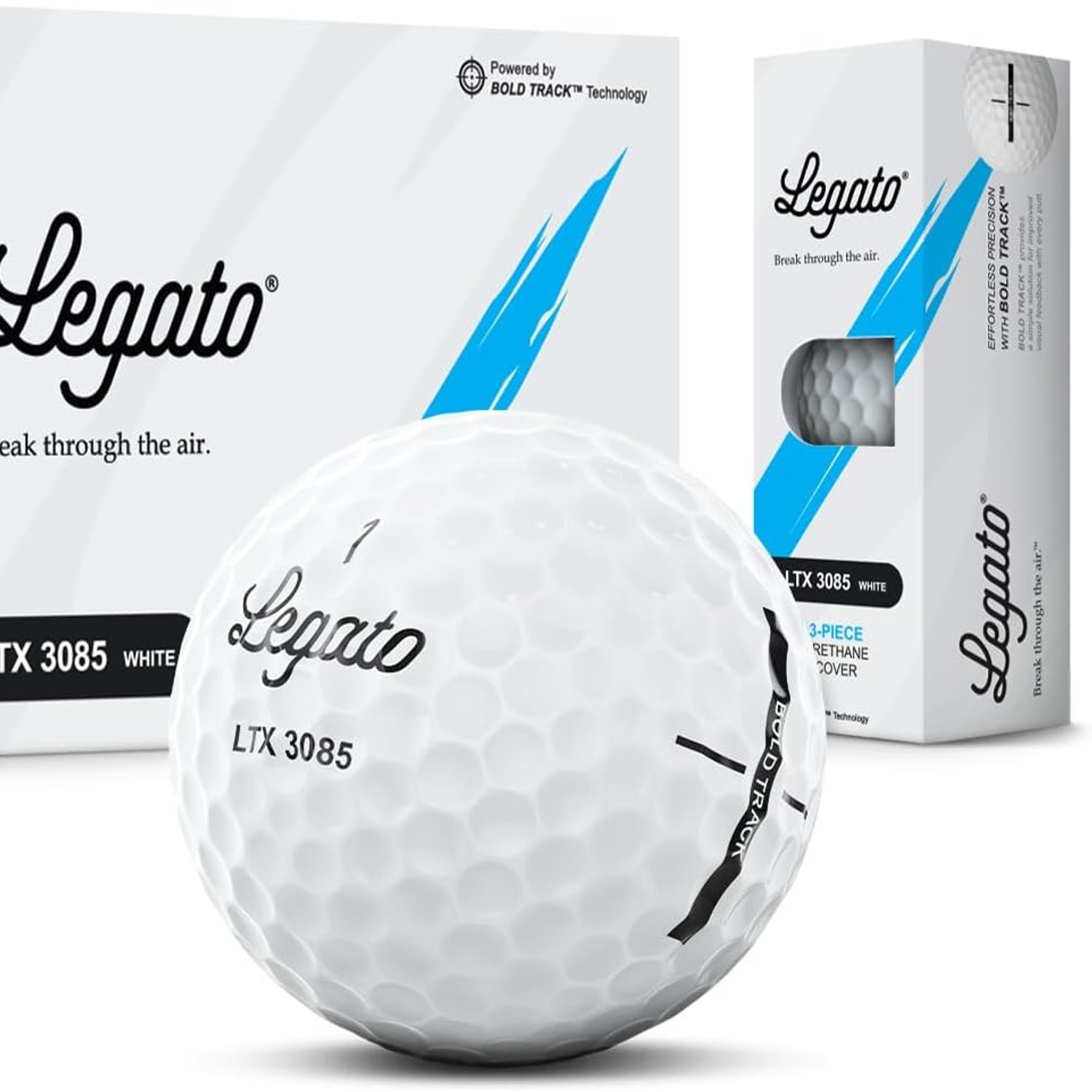
This pack gives you a clear starting point. It contains 12 white golf balls, with three-piece construction and polyurethane listed in the detailed specifications. Putting alignment markings are also included.
Those details help narrow your choice. They do not tell you exactly how the ball will behave with your swing. A sensible purchase starts with what is stated, then leaves room for your own experience on the course or practice green.
What comes in the box
The listed contents are one pack of one dozen golf balls. That means 12 balls in total, not 12 packs. The size description of “1 DZ” refers to this quantity rather than a separate ball size.
No tees, carry bag or other accessories are listed. If you are buying a golf gift for adults, plan around the balls themselves rather than expecting a wider gift set.
A dozen is also a useful quantity to think about in terms of your own habits. You might want to keep some in your bag and reserve the rest for later. Alternatively, you may prefer to set the pack aside for practice. There is no need to assume that every golfer uses a dozen at the same rate.
Understanding the three-piece construction
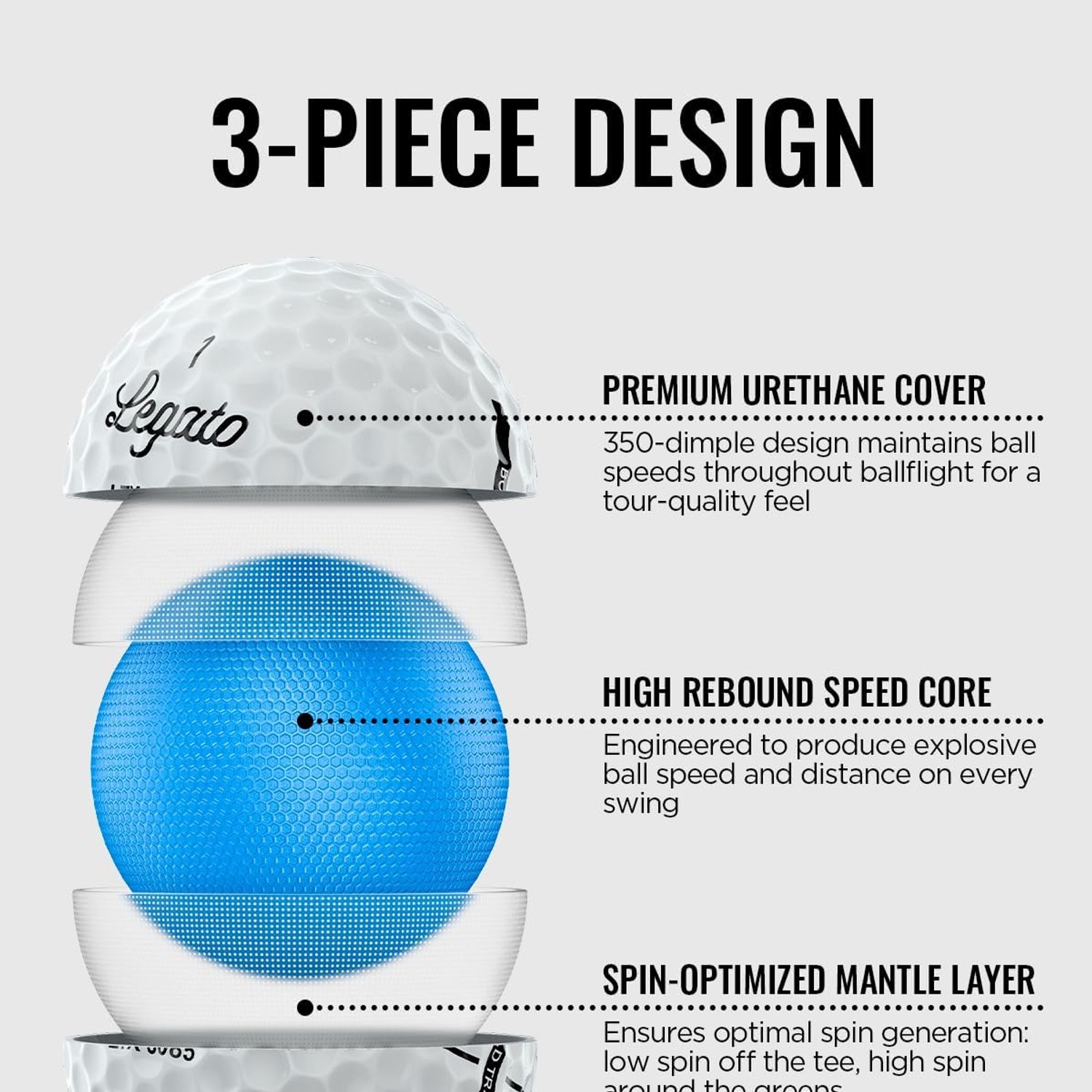
Three-piece golf balls have a construction described in three parts or layers. That is the construction stated for this product. The maker does not name the material of every layer, so it would be wrong to fill in those gaps.
Polyurethane, also written as PU, appears in the material specification. If you are comparing polyurethane golf balls, this is a relevant detail to place beside the construction type.
Keep the two facts separate when shopping. A material name tells you something different from a layer count. Neither one, on its own, establishes how much distance you will gain or how many strokes you might save. Those outcomes are not measured in the maker's description.
What the compression figure can tell you
The maker's details states 85 compression. This is worth noting if you already know the compression of a ball you enjoy using.
It is not a personal fitting result. The maker does not give a tested swing-speed band, and it does not establish that a certain speed is needed to use the ball. Avoid treating a single number as a complete answer to whether a ball suits you.
If you are changing from another ball, keep your first comparison simple. Use familiar clubs and familiar shots rather than changing several things at once. Your own observations may be more helpful than trying to predict every part of the experience from the specification sheet.
Put soft feel in context
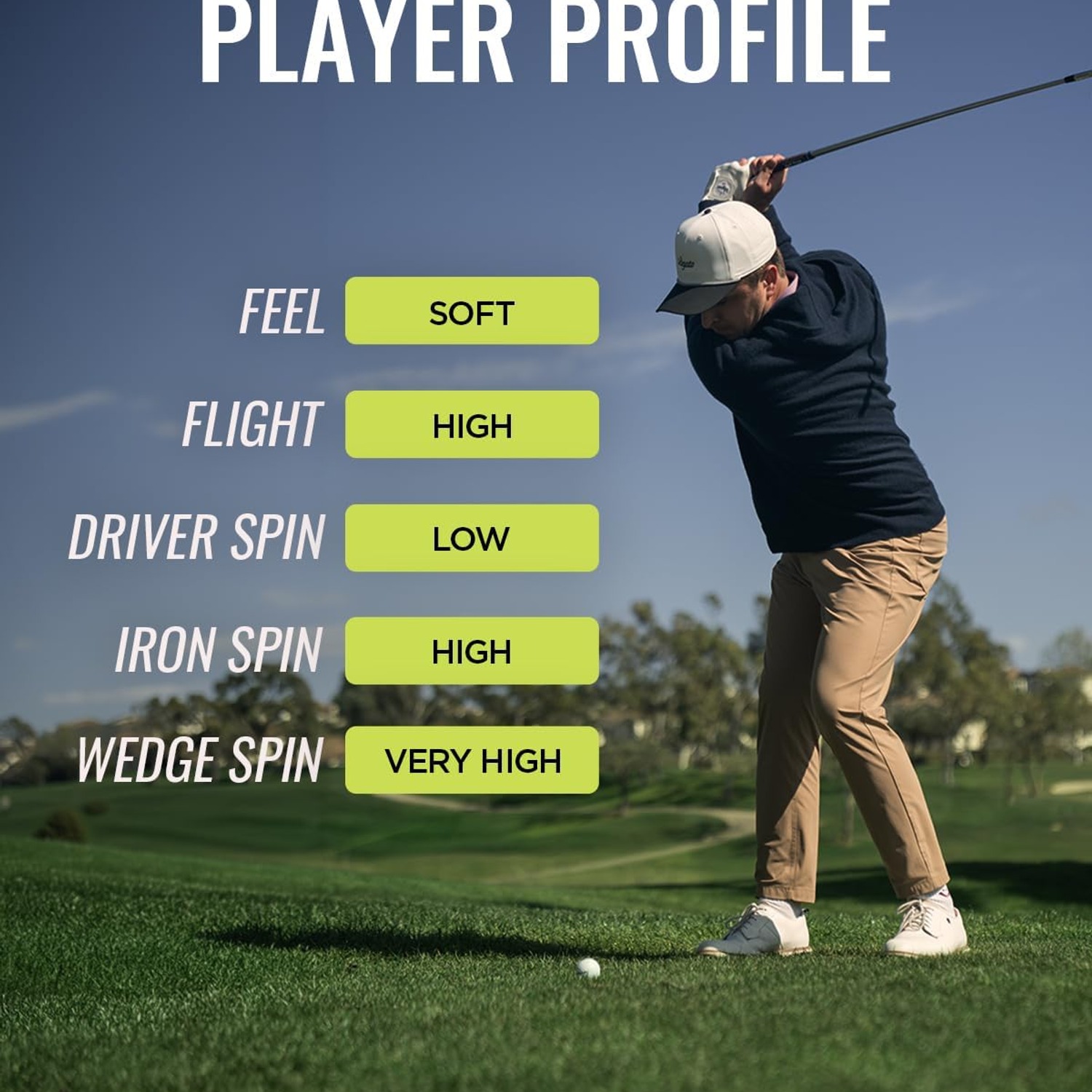
Soft feel golf balls appeal to players who pay close attention to the sensation of impact. However, “soft” is not a precise personal promise. Two golfers can describe the same ball differently.
The product description refers to soft feel, but there is no measured comparison against named alternatives. That leaves a clear limit on what can be said before you try them.
Think about where feel matters most to you. It may be a short putt, a chip or a fuller swing. Comparing those familiar shots gives you a more useful basis for a decision than expecting one description to cover every club in your bag.
Using the putting alignment markings
These are golf balls with alignment markings, which give you a visible reference during setup. You can point the markings along your intended starting line before taking your stance.
The marking does not choose the line for you. Reading the green and deciding the pace are still parts of the task. It is best treated as a reference that supports your routine, rather than something that replaces it.
For practice, try using the same setup process on each putt. Pick a line, position the ball and then make your stroke. If you already have a routine you trust, work the marking into that routine only if it feels useful. There is no need to rebuild your whole approach around it.
Reading the size and weight correctly
The listed ball diameter is 1.68 inches. That is a ball measurement, not the size of the box.
The listed item weight is 637 g. The maker does not identify an individual ball weight, so do not read that figure as the weight of each ball. Package length, width and height are also not supplied.
This distinction matters when comparing products. Some shops show package information beside ball specifications, which can make unrelated figures look like direct comparisons. Look at the label attached to each number before drawing a conclusion.
The maker's details also states 350 dimples. It does not include detailed measurements of the dimple pattern or a flight test report that you can use to predict your own results.
Who this pack may suit
The intended age range is adult, and the stated sport is golf. There is no required handicap or experience level in the maker's description.
A beginner might consider this 12-pack of golf balls when building a basic supply. A regular player may be more interested in comparing the three-piece design with a current choice. Someone who practises putting may value the existing alignment markings.
None of those uses makes the pack the right choice for everyone. If you already have a strong preference for another construction or feel, use that preference as part of your decision. A clear reason to try something is more useful than a broad promise that one ball suits every golfer.
A fair way to compare with your usual ball
Before buying, write down what you actually want from a replacement. Perhaps you want the same type of construction, a dozen white golf balls or a visible putting reference. These are details you can check without guessing.
Once you have the balls, compare them in a setting you know. For putting, use a familiar practice area and similar putt lengths. For other shots, avoid drawing a firm conclusion from one unusually good or poor strike.
Keep expectations modest at first. The purpose of a comparison is to learn whether the ball fits your preferences, not to prove that a new purchase must be better. No individual distance, accuracy or scoring result is established by the maker's description.
Buying for practice or as a gift
Golf balls for putting practice can be a straightforward purchase when you know which features matter to you. Here, the pack count and alignment markings are clear. If you want accessories as well, you will need to choose those separately.
Gifting calls for a little more checking. Golfers sometimes stick closely to one type of ball, even when another option looks similar on paper. Asking about their usual construction or preferred feel can prevent a well-meant gift from missing the mark.
The pack contains new balls and is described for adult use. Gift wrapping or special presentation packaging is not specified, so do not rely on either being included.
Simple care between rounds
Wipe away dirt with water and a soft cloth, then dry the balls before putting them away. This also gives you a chance to look for visible damage.
Avoid abrasive cleaning products or hard scrubbing. There is no product-specific cleaning chemical or treatment stated in the maker's description, so a simple approach is the sensible starting point.
Check for cuts and other marks before reuse. If a ball looks damaged, set it aside rather than assuming it will behave like an undamaged one. Keeping your practice supply separate from your other balls may also make it easier to track what you are using.
Check delivery and returns before ordering
Check the estimate shown when you order, especially if you need the pack for a gift or a planned round. An in-stock product page is not an arrival-date promise.
The stated change-of-mind return period is 14 days from delivery, and the customer pays return postage. Your rights under the Consumer Rights Act 2015 also apply.
If the pack is not right, contact us promptly for the return steps. No separate warranty is specified in the maker's description. For competition use, check the requirements of your event, since no rules-conformity claim is made here.
The short version
This is one dozen white golf balls with three-piece construction, polyurethane listed in the specifications and putting alignment markings. The stated figures include 85 compression, 350 dimples and a 1.68-inch diameter.
Choose them because those details match what you want to try. Leave distance and feel expectations open until you have compared them with your usual ball. That is a more useful route to a good fit than buying on promises alone.