
The complete guide
A Practical Guide to Choosing and Using a Putting Green Mat
Finding time to practise putting can be harder than finding something to work on. You might want to check your setup or spend a few minutes on pace, but a trip to a practice green is not always practical. A putting green mat gives that practice a place in your normal day.
This mat offers a listed 3-metre length, visual guides and a surface intended for putting in two directions. It is described for use at home, in the office and outdoors. Before choosing it, though, there is one important detail to resolve. The width figures in the maker's description do not agree.
What a home putting mat can offer
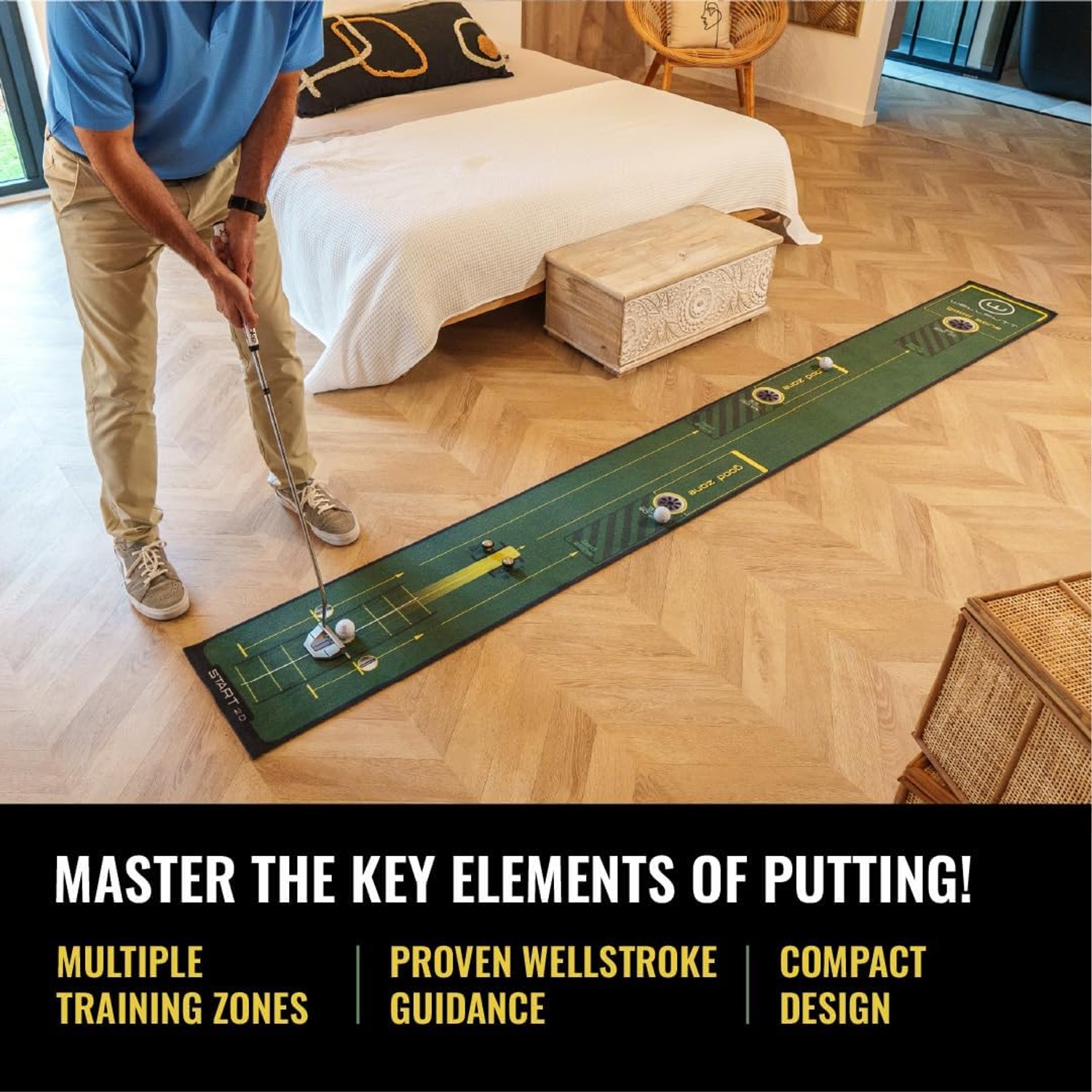
A dedicated golf practice mat gives you a repeatable place to set up. Instead of choosing a new patch of carpet each time, you can return to the same surface and use its markings as reference points. That makes it easier to keep a session focused.
The useful part is the routine you build around it. You could spend one session checking where the ball sits, then use another to work on pace. Trying to change everything during every putt can make practice confusing. A clear task gives you something specific to watch.
A home putting green is still a practice surface, not a replacement for a course. Real greens bring slopes, changing grass conditions and different speeds. Use a mat to give short putting more attention, then take that work outside and learn how it carries over.
How the visual guides help
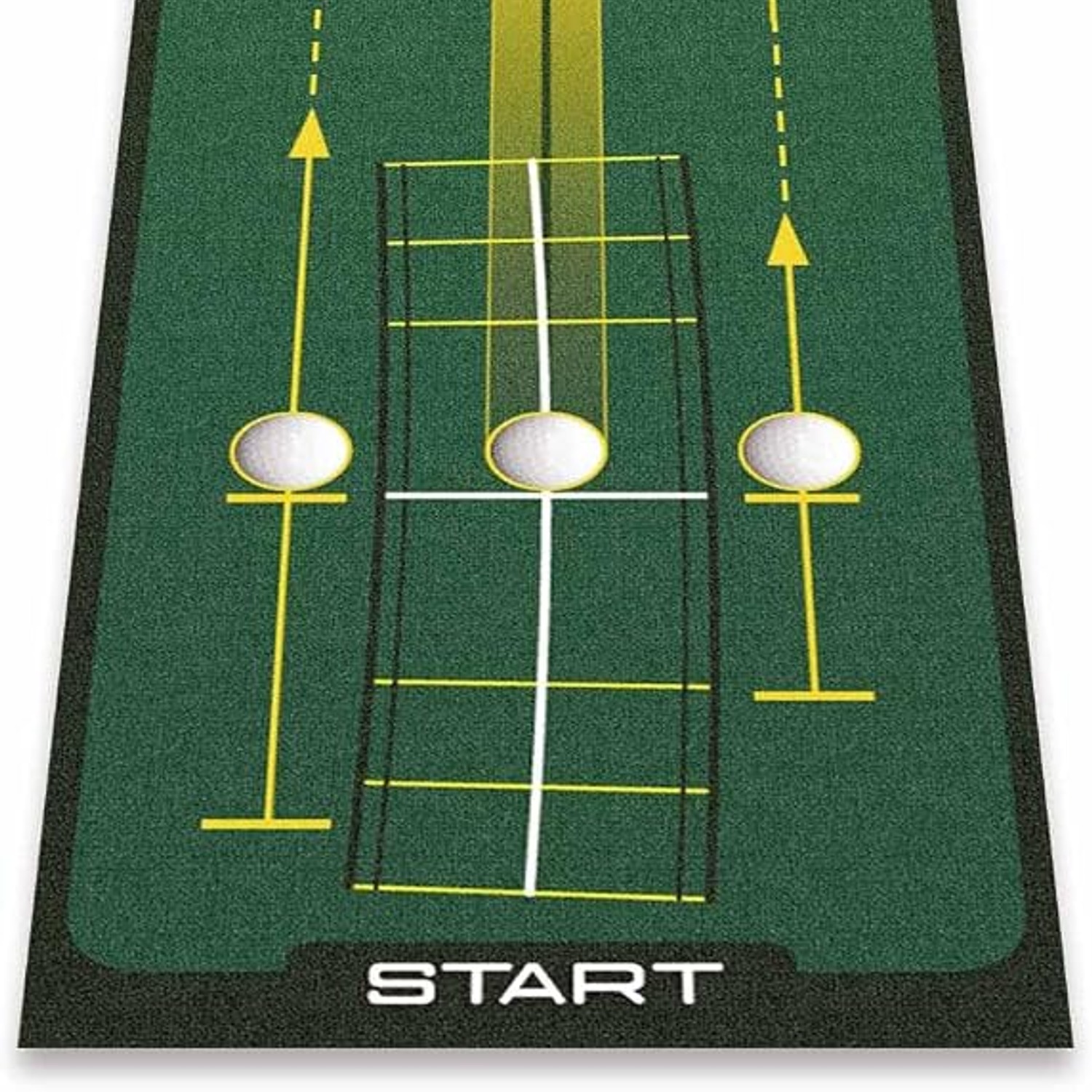
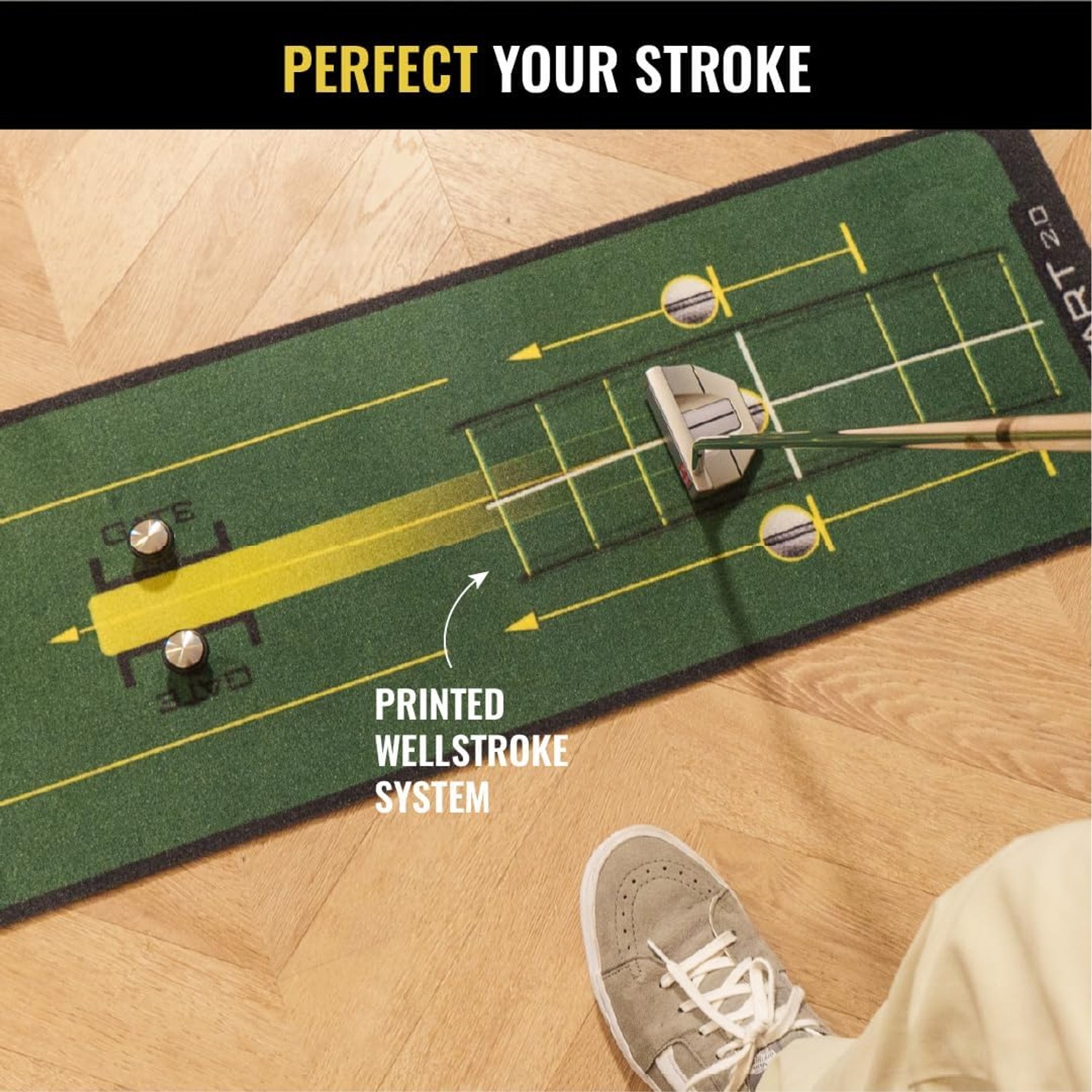
The product description identifies guides for ball position, body alignment, putter alignment and stroke path. These marks give you something to compare your setup against. They do not measure your stroke or tell you why a putt missed.
Start by choosing one reference. For example, use a guide to check the putter face before each attempt. Take your normal stance, look at the relationship between the face and the line, and then make the putt. Repeat without rushing the setup.
A putting mat with guides can also help you notice when your starting position changes. If the ball has moved forward or back without you meaning it to, the markings offer a way to spot that. Treat them as useful reminders rather than a reason to force an uncomfortable stance.
Check the size before you buy
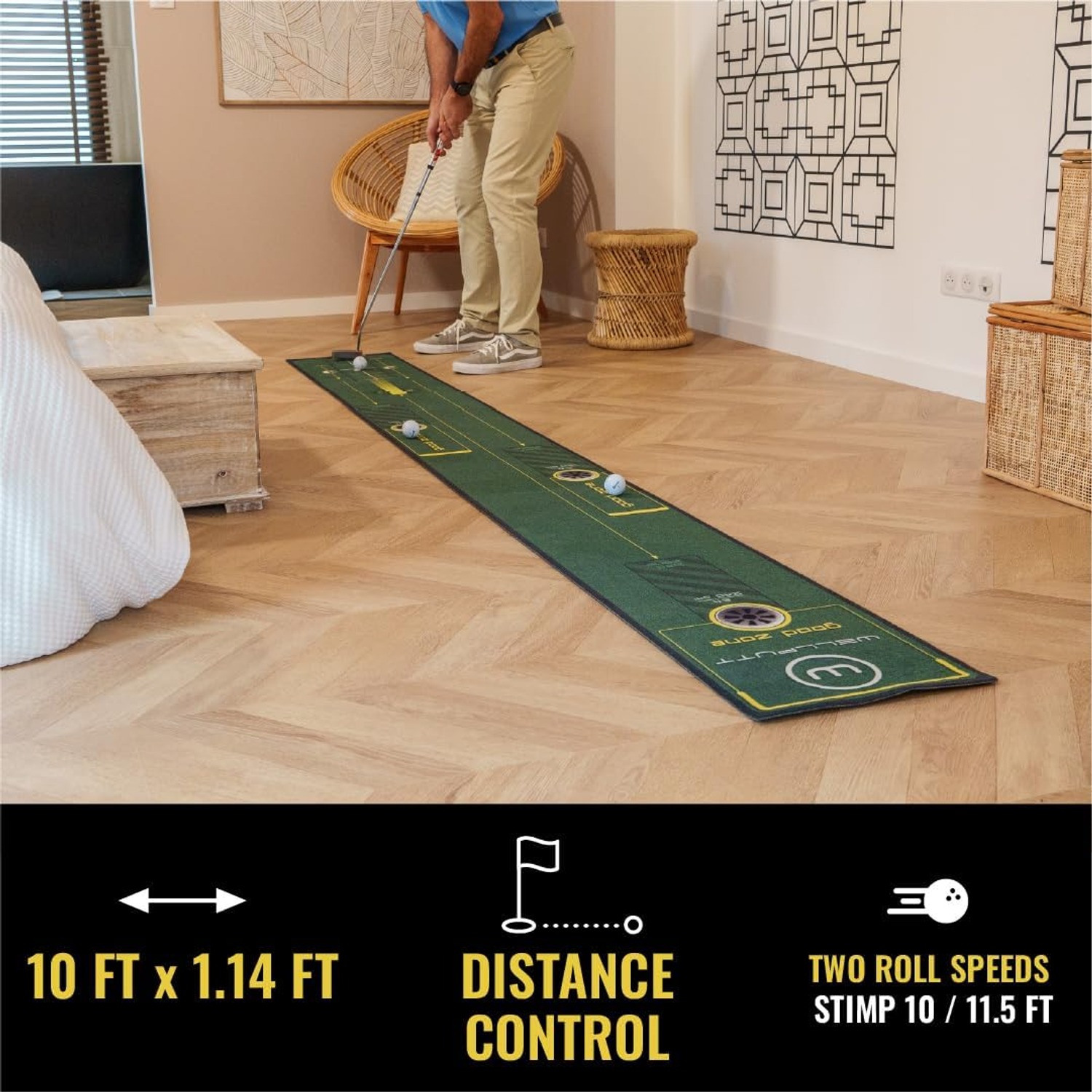
Length is listed consistently as 3 metres. The detailed item dimensions are given as 3 metres long, 0.35 metres wide and 0.02 metres thick. A separate floor-width field, however, says 120 inches. Those width figures cannot both describe the same footprint.
Do not choose a tight space based on either width without confirmation. Ask for the current dimensions first, especially if the mat needs to sit between furniture or fit a particular room. The separate dimensions attribute is blank, so it does not settle the conflict.
You also need room beside the mat for your feet and putter. Measure the whole practice area, not just the strip where the ball will roll. Think about door swings, chairs and the route other people take through the room.
For storage, the maker says the mat can be rolled. It does not give rolled dimensions. If it must fit in a cupboard, under a desk or in a car, confirm the packed size rather than assuming that a rollable mat will fit.
Understand the surface and backing
The specification table lists polyester as the material and synthetic rubber as the backing. It also lists black and white colouring and an item weight of 1.2 kg. These details are separate from the blank material and colour attributes in the source record.
The surface is described as giving a medium-to-fast green feel. There is no measured speed rating, so that description should not be treated as an exact match for your local course. Even outdoor greens at the same venue can change with weather and maintenance.
The supplied heading calls this a non slip putting mat. Its backing is listed as synthetic rubber, but that does not establish equal grip on every floor. Lay it on a clean, flat surface and check that it stays in place before starting practice.
Choose a useful practice distance
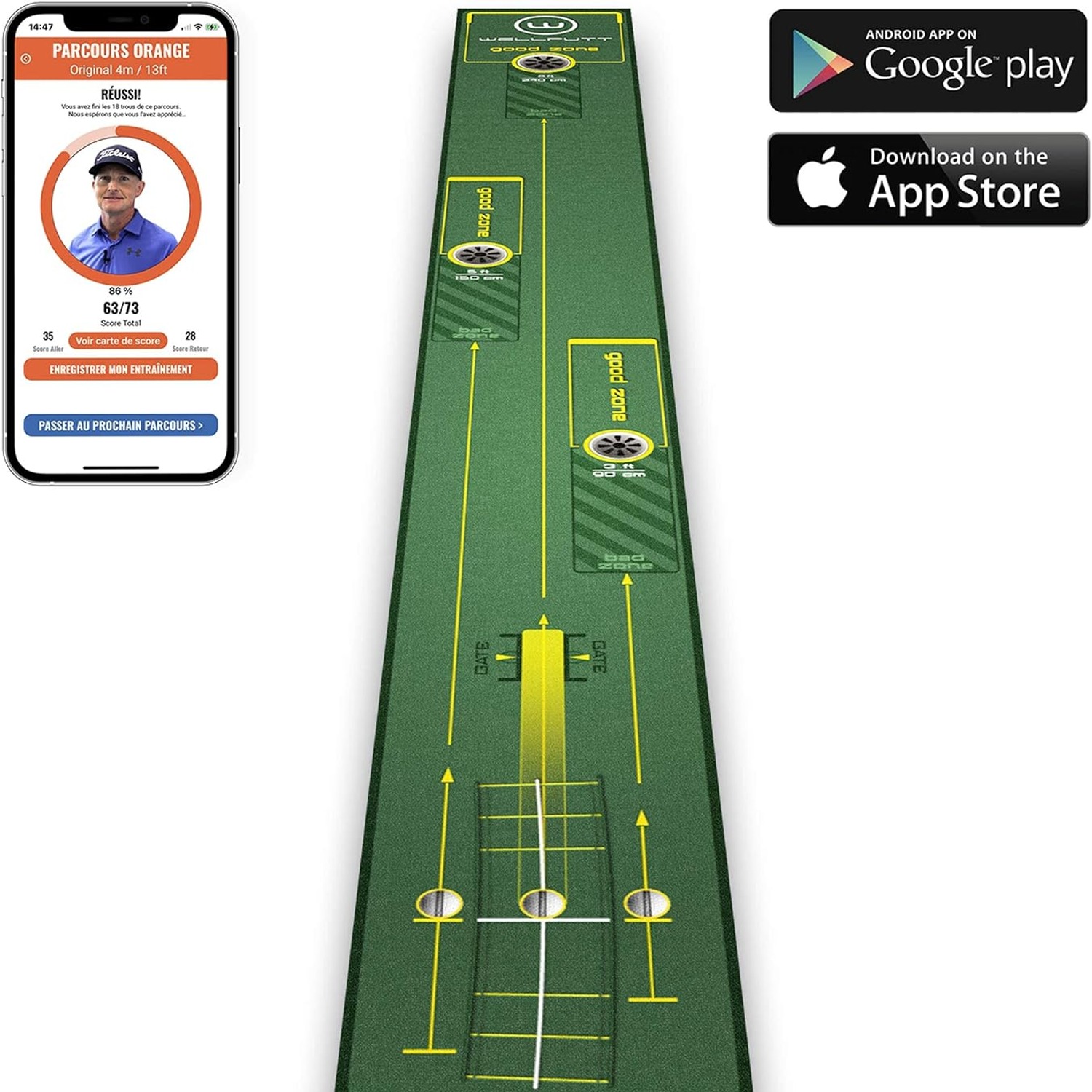
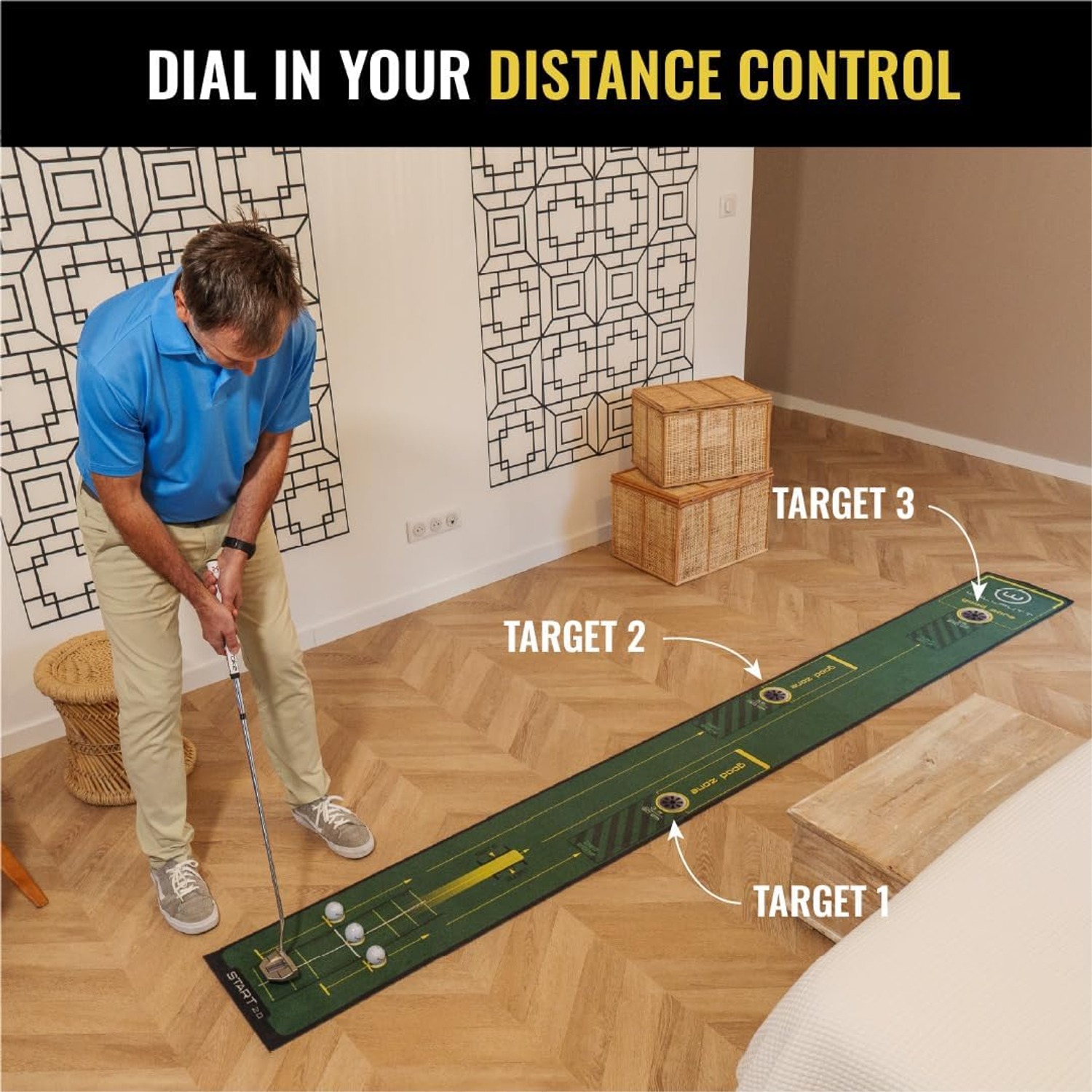
A three metre putting mat is intended for short-range work. The maker refers to practice at 1, 2 and 3 metres, giving you different starting distances to use within a session. You do not need to begin with the longest attempt.
Start closer while you settle into your setup. Then move back and pay attention to how much stroke you need. The aim is to notice the relationship between movement and roll, rather than simply hitting the same putt without a plan.
When using a distance control putting mat, change one thing at a time. Keep the same target while changing your starting point, or keep the distance fixed while checking your setup. Either approach makes it easier to understand what you are practising.
The maker lists three holes, but it does not explain their sizes or construction. It also does not confirm an automatic ball-return system. If either feature matters to how you want to practise, ask before ordering.
Who this mat may suit
For someone new to golf, a putting stroke trainer with visible reference lines offers a clear place to begin. Keep the first sessions simple. A comfortable setup and a deliberate starting routine are enough to focus on without adding lots of separate instructions.
More experienced golfers may prefer to use it for repeated short putt practice between visits to the course. The value is having a place to work when a full practice session is not possible. There is no promise that a particular amount of mat practice will produce a certain score.
As an office putting mat, it needs a suitable spot rather than just an empty-looking strip of floor. Keep shared routes clear and consider whether a practice session will interrupt others. A space that works after hours may not work during a busy day.
Indoor use, outdoor use and storage
Indoor and outdoor use are both described by the maker. Indoors, look for a flat supporting floor and enough clear space around it. Remove small debris before laying the mat down so you are not practising over avoidable bumps.
For outdoor putting mat use, UV resistance is stated. That is not the same as a weatherproof rating or permission to leave the mat outside all year. The maker does not provide limits for rain, standing water or long-term exposure.
Bring it into dry storage between sessions unless the supplied instructions say otherwise. Before rolling, check that it is clean and dry. This is a sensible routine for keeping dirt and moisture from being wrapped inside the stored mat.
The maker describes easy rolling, while the specification table also calls the form rigid and rectangular. If frequent packing is central to your plans, confirm the recommended storage method. No carry bag or travel case is confirmed.
Keep care simple
Start with gentle removal of loose dirt. A clean practice area can also reduce how much debris reaches the surface. Follow the care label or instructions that arrive with the product for any more involved cleaning.
Avoid assuming that ordinary carpet treatments will suit it. The maker does not specify machine washing, soaking or a particular cleaning solution. Harsh cleaners and abrasive brushes are unnecessary risks when a supported cleaning method has not been given.
After cleaning, allow the mat to dry before storage. Check the backing as well as the surface, and choose a dry place for the rolled mat. If it does not lie as expected after storage, consult the supplied guidance rather than applying heat or heavy treatment.
Check the details that affect your purchase
A putter, balls and other accessories are not confirmed as included. If you are buying your first putting practice aid, check the package contents so you know what else you need. The same check matters when buying a golf gift.
An exercise programme through an iOS and Android app is mentioned. The maker does not confirm current access, compatibility or fees. Treat that as something to verify, not as a guaranteed part of the purchase.
A lifetime warranty is listed, but its terms are absent. Ask what is covered and how a claim works. Delivery timing is also unspecified here, so use the estimate provided for your address when planning an order.
The short version
This Putting Green Mat offers a listed 3-metre practice length, visual guides and a rollable format for short putting sessions. It may suit someone who wants golf training equipment close at hand rather than relying on trips to a practice green.
Confirm the width conflict, package contents and warranty terms before buying. Then choose a clear space and a simple practice task. A mat gives you somewhere to practise; a thoughtful routine gives that time a purpose.